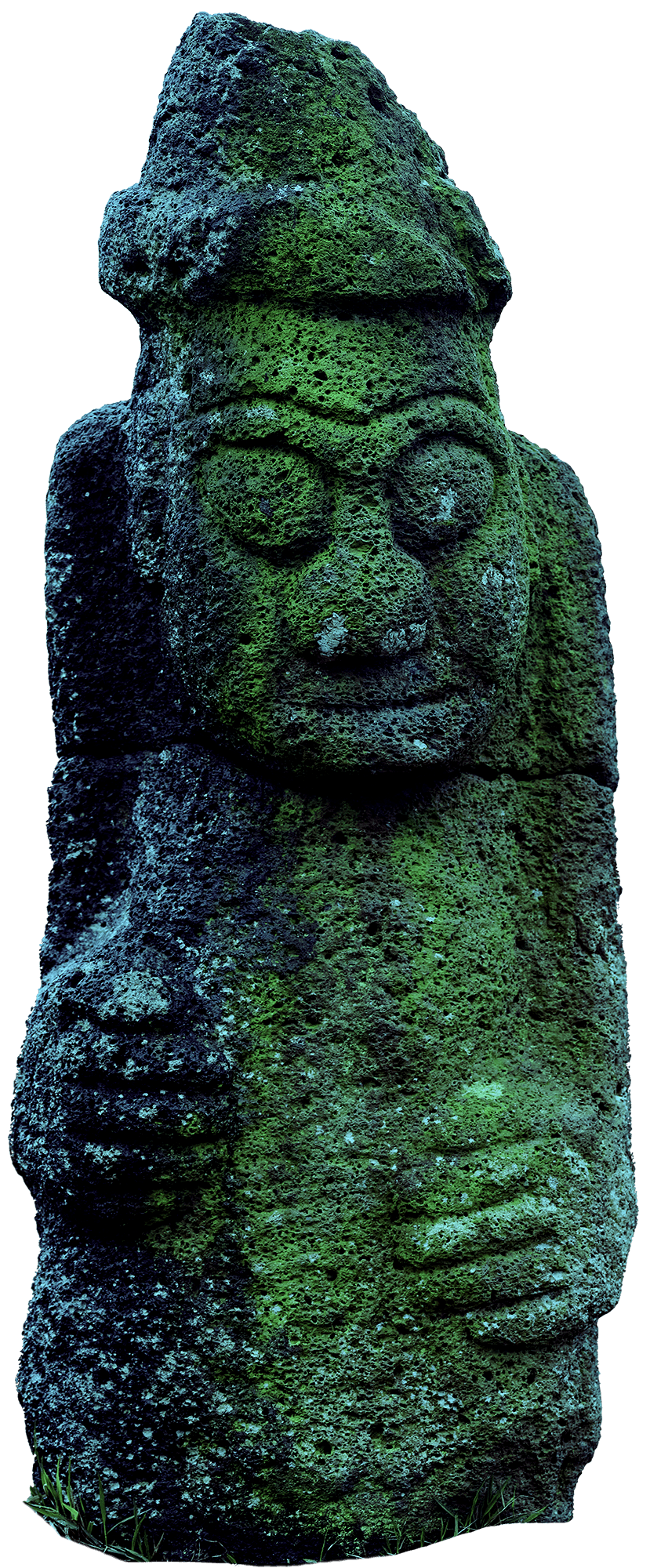
Dolharubang stone guardian — left figure
Jeju Stone Park

Where Stone Remembers

A landscape of Jeju myth

On Jeju, the island itself was born of stone. Legend says the giant grandmother Seolmundae Halmang shaped Hallasan from her apron, and her five hundred sons turned to stone in grief. Jeju Stone Park, gathered since 1999 on the site of a former landfill, holds this mythology and the traditions it inspired in one volcanic landscape.
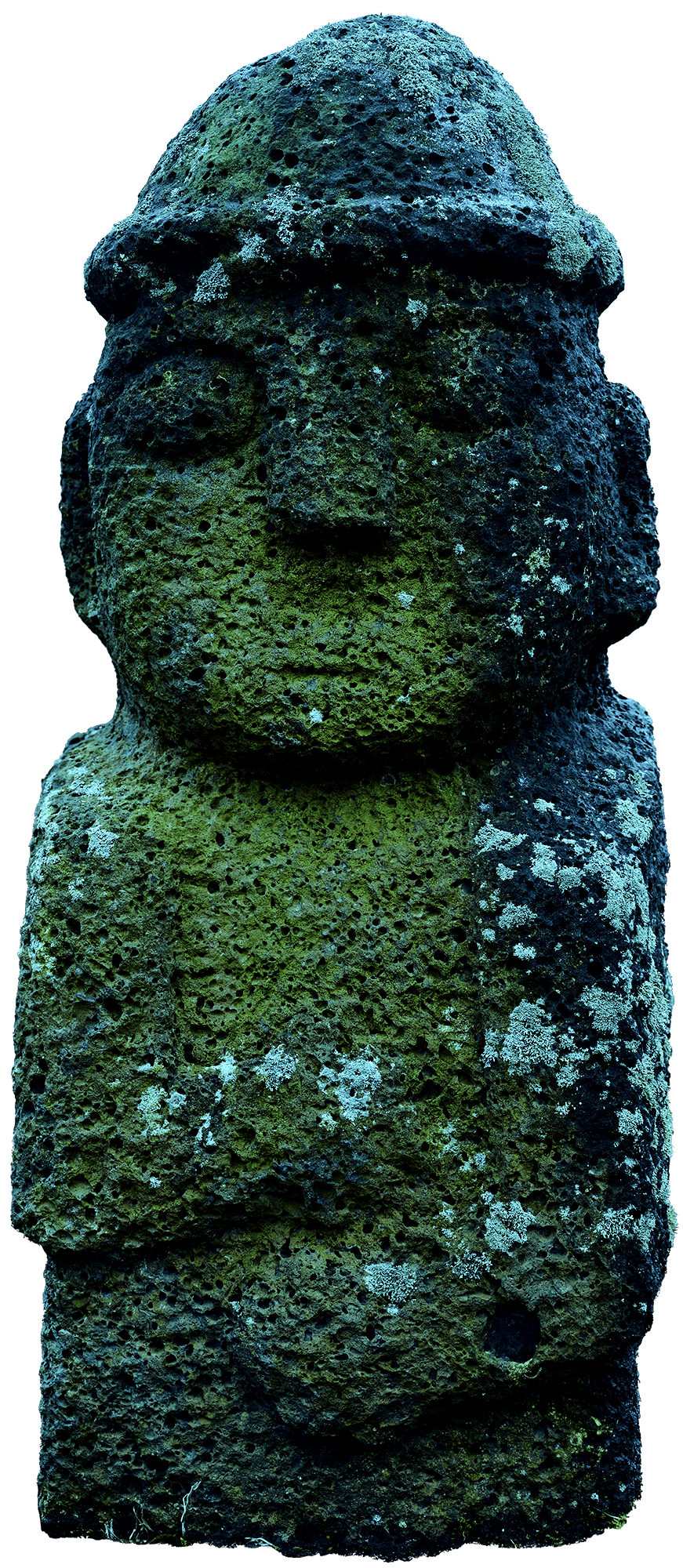
Dolharubang stone guardian — right figure

Walls, vessels, figures: all of it volcanic basalt, all of it sharing the same dark skin. That skin is unusually responsive to light. A midday sun draws out warm amber tones; the sunset returns them to deep copper; mist cools them to silver. At the foot of Hallasan, the stone has changed this way for centuries.
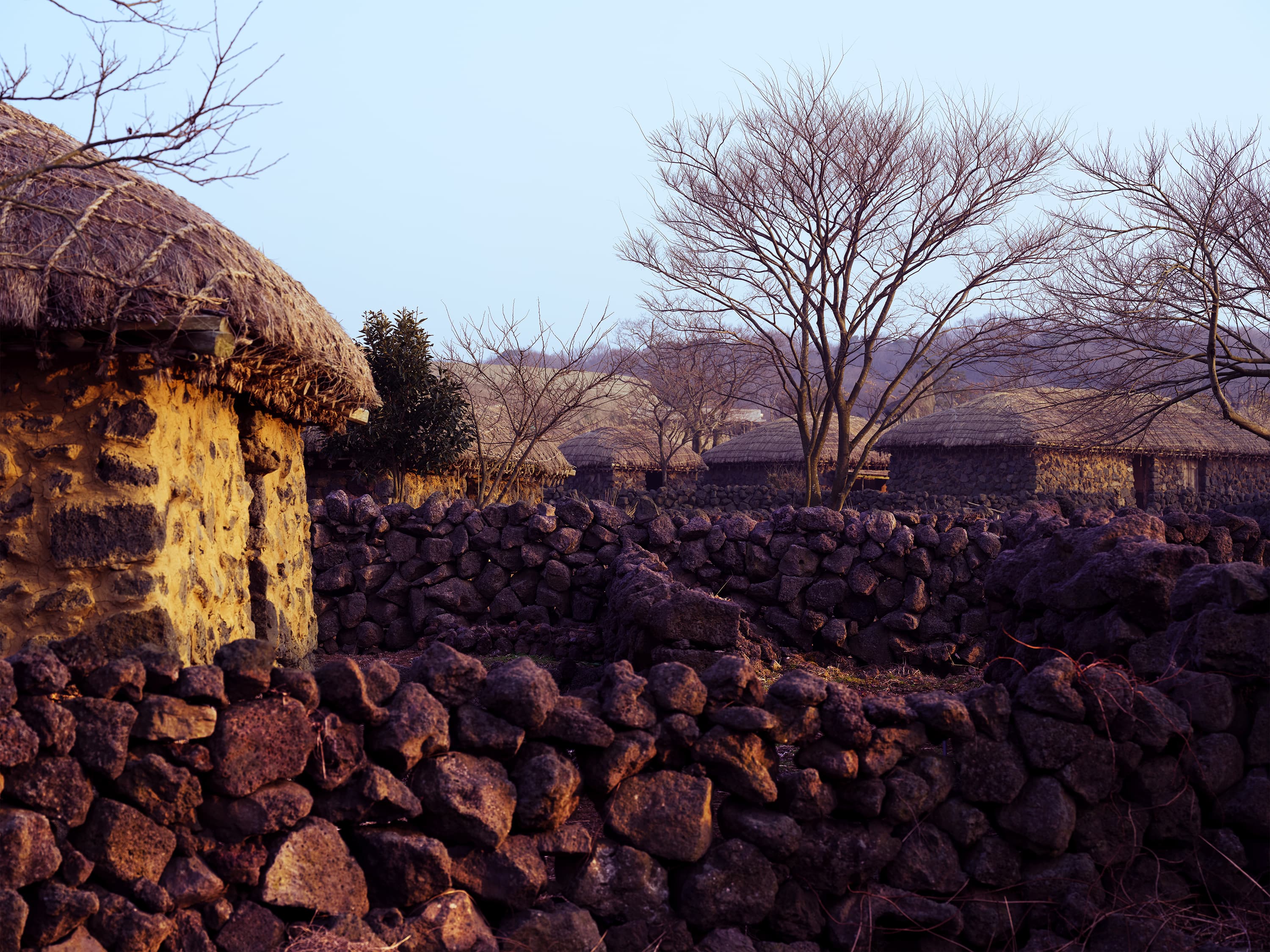
Basalt stone walls with thatched village rooftops behind

Hadam

Walls that breathe.


Low, porous, dry-stacked: walls that broke the gales without trapping them.

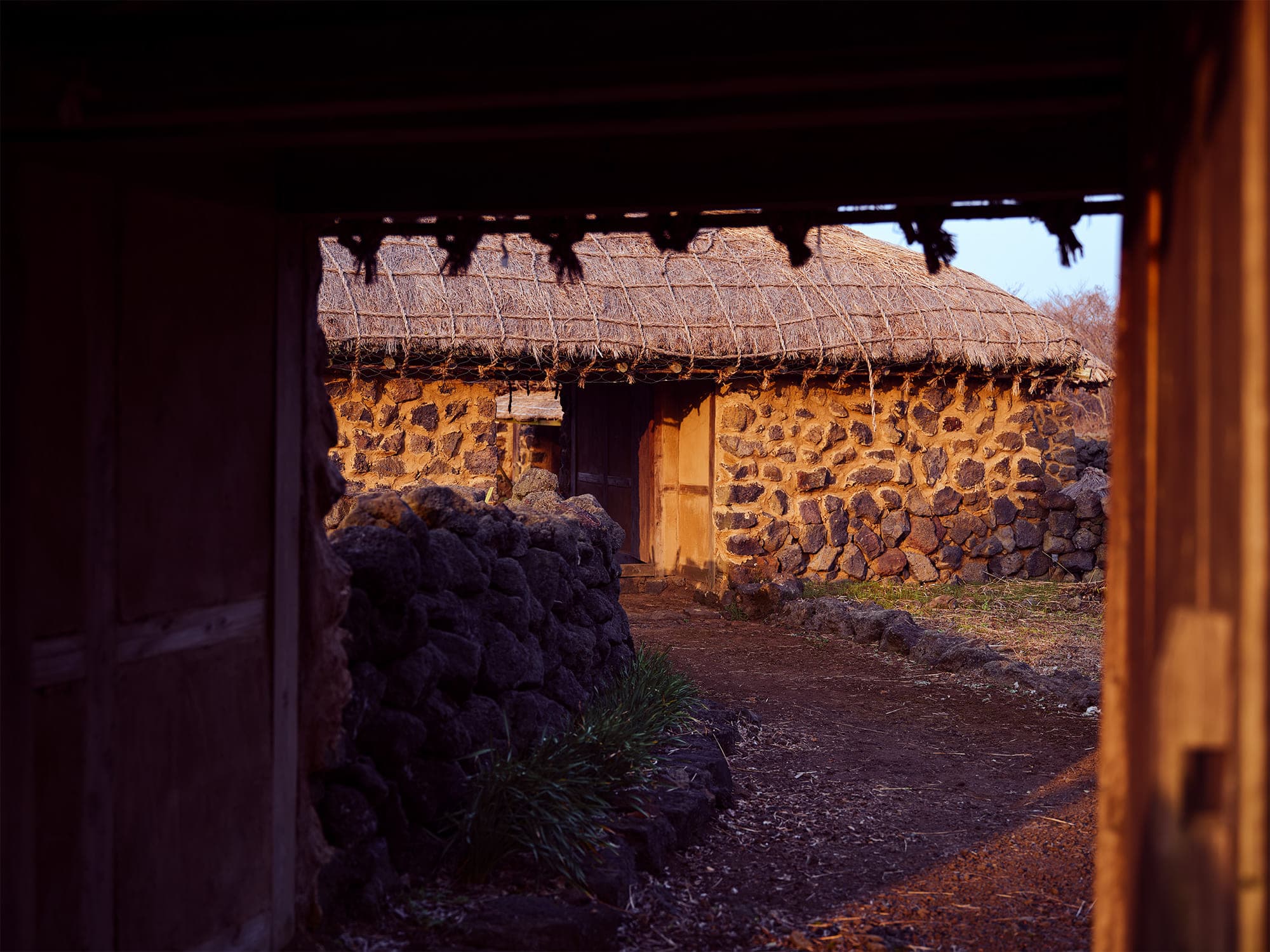
Jeju's villages were shaped by wind and basalt. Islanders dry-stacked volcanic stone into batdam: low, porous walls that broke the gales without trapping them. Gaps were left open so people and livestock could pass freely. Thatched roofs, lashed with rope nets against typhoons, kept the houses low and rooted to the earth. At Stone Park, a reconstructed thatched village holds these walls as they once stood.
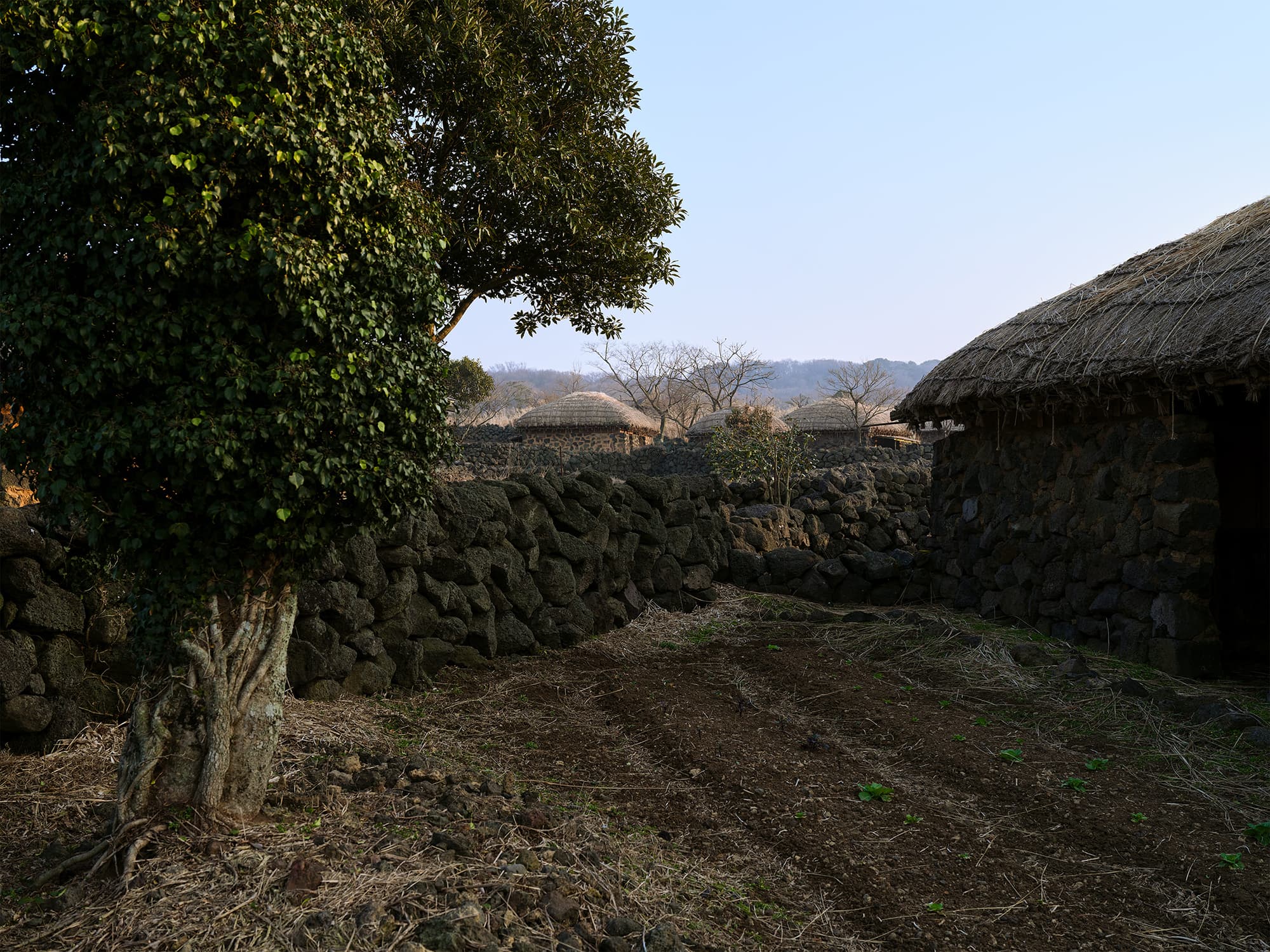
Thatched-roof houses and dry-stacked basalt walls with a tree in the foreground, early morning light
View through a dark doorway to a sunlit thatched stone house

Onggi

Vessels that breathe.


Earthenware jars, fired low, porous by design.

Korea's most essential vessel was never meant to be sealed. Onggi, earthenware jars fired at low temperatures, are porous by design. Their walls let air circulate through fermenting doenjang, gochujang, and kimchi. On Jeju, the jars carry a further difference: unglazed, unlike those of the mainland, coated only with ash from burnt firewood and a finish of natural oil that draws out the carvings beneath. Every household kept a jangdokdae: a sunny stone terrace lined with dozens of jars, each one tending its own quiet transformation. At Stone Park, the jangdokdae sits as it always did, basalt beneath and basalt around.

Field of upturned Onggi jars at dusk
Rows of upturned earthenware jars in warm sunset light
Field of upturned Onggi jars in dramatic blue and orange light
Golden round Onggi pottery jars glowing in evening light

Bangsatap

Stone by stone, a wish.


Cairns of basalt, raised by communal prayer.

Across Jeju, conical towers of stacked basalt rise from fields and crossroads. Called bangsatap, these cairns served as spiritual markers: altars to village guardian spirits, built stone by stone as acts of communal prayer. Each rock placed was a wish for safe harvests, calm seas, protection from wind. The Park's founder, Paek Un-cheol, spent decades gathering stones like these from across the island.

Row of traditional Jeju stone cairn towers at dusk
Single large Bangsatap stone cairn against blue sky
Moss-covered stone cairn with Korean inscription in spring
Line of Dolharubang statues in golden misty backlight
Tall Dolharubang statue with pointed hat against trees
Dolharubang statue standing alone in an open field

Dolharubang

The grandfather stones.


Guardians at the gate, where the town began and the wild island ended.

The dolharubang, grandfather stones in Jeju dialect, were first placed in 1754 by Magistrate Kim Mong-gyu at the gates of the island's three walled towns, where they served as both guardians and boundary markers. Of the original forty-eight, forty-five remain on Jeju today, and two are kept at the National Folk Museum in Seoul. Today they are the island's most recognised symbol, but their original role was practical as much as spiritual: they told travellers where the town began and the wild island ended.

Carved from volcanic basalt with bulging eyes, a broad nose, and hands resting on the belly, each figure was unique, shaped by its maker's hand rather than any fixed template. They keep watch alongside the Five Hundred Generals, the goddess's sons turned to stone, still standing across the Park's fields.

Close-up of a Dolharubang stone grandfather face
Winding path through stone cairns and a thatched hut
Tall stone sculptures of the Five Hundred Generals against a vivid blue sky

Obaek Janggun

The five hundred generals.


Seolmundae's sons, turned to stone in grief.

Across the Park's fields stand the Obaek Janggun, the five hundred sons of the giant grandmother Seolmundae Halmang, turned to stone when they believed their mother had died. Some are weathered into shapes barely human; others rise sharp against the sky. They are not exhibits. They are the myth made landscape, and the reason the Park exists at all.

Large round boulder balanced on rocks with stone formations behind
Stone statue silhouettes of the Five Hundred Generals against a vivid orange sunset