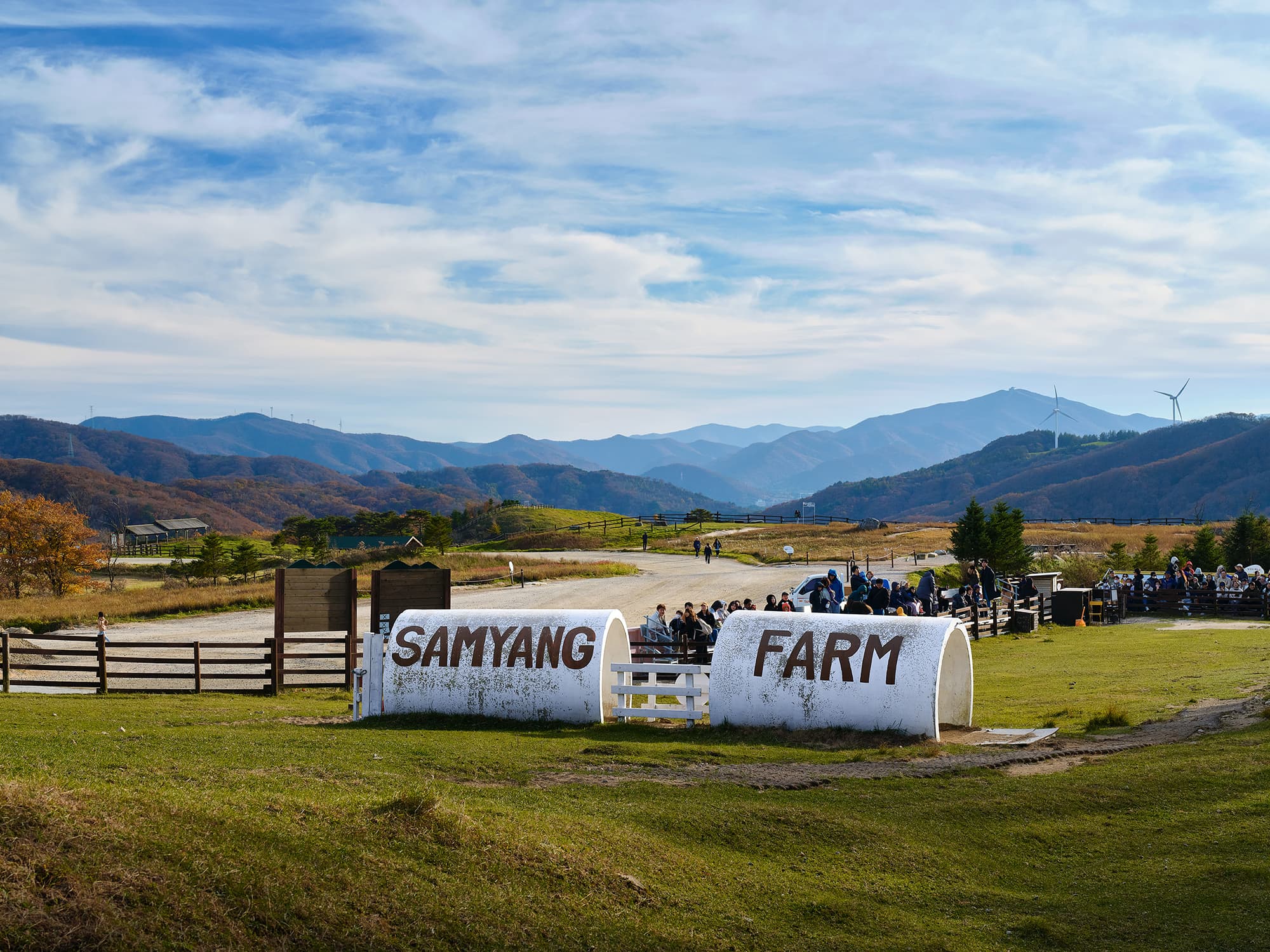
Samyang Farm: Wind, Livestock, Guinong, Cowboy
Samyang Ranch opened in 1972, during the Saemaul Undong (새마을 운동) push to modernise rural Korea. What grew here is a layered place: American agricultural methods, European livestock, Western leisure imagery, all carried by the same highland wind.
At 850 to 1,500 metres, Samyang sits high enough that wind is the first thing you notice. It moves through the grass, the fences, the rows of pinwheels staked along the paths.
The turbines on the ridgeline are part of the same fact. Wind is what the ranch was built to work with, not around.

Livestock


Around 900 cattle graze the high pastures. The ranch was set up to supply domestic beef and dairy at a time when Korea imported most of both.
The sheep came later and stayed. Samyang now runs one of the largest flocks in the country, and the animals have become as much of a draw as the landscape itself.


Guinong

In recent decades, the term guinong (귀농) has emerged to describe the growing number of Koreans seeking to return to rural areas in search of a quieter, more intentional life. While some pursue actual resettlement and farming, for many others, the idea of guinong represents a personal longing for simplicity, autonomy, and a renewed connection to land and nature.


For many visitors, especially those from urban areas, the sight of sheep grazing freely across the hills offers a tangible connection to rural life and a slower, more natural rhythm. Their presence supports not only production but also education and public engagement with farming culture.

Cowboy

The herding shows are the loudest attraction at Samyang. A working dog moves a small flock across the field while a handler watches from the edge.
Border collies and their cousins are here because herding is what they do, the same way the sheep are here because the climate suits them.


Sheepdog trials are British in origin, but the cowboy showed up after the war, through US bases, films, and the cultural reach that came with both. He stayed long enough to become part of how the country pictures rural leisure.
