Frozen Waters and Frosted Trees in Gyeongancheon

TheWetland'sEmptyHours

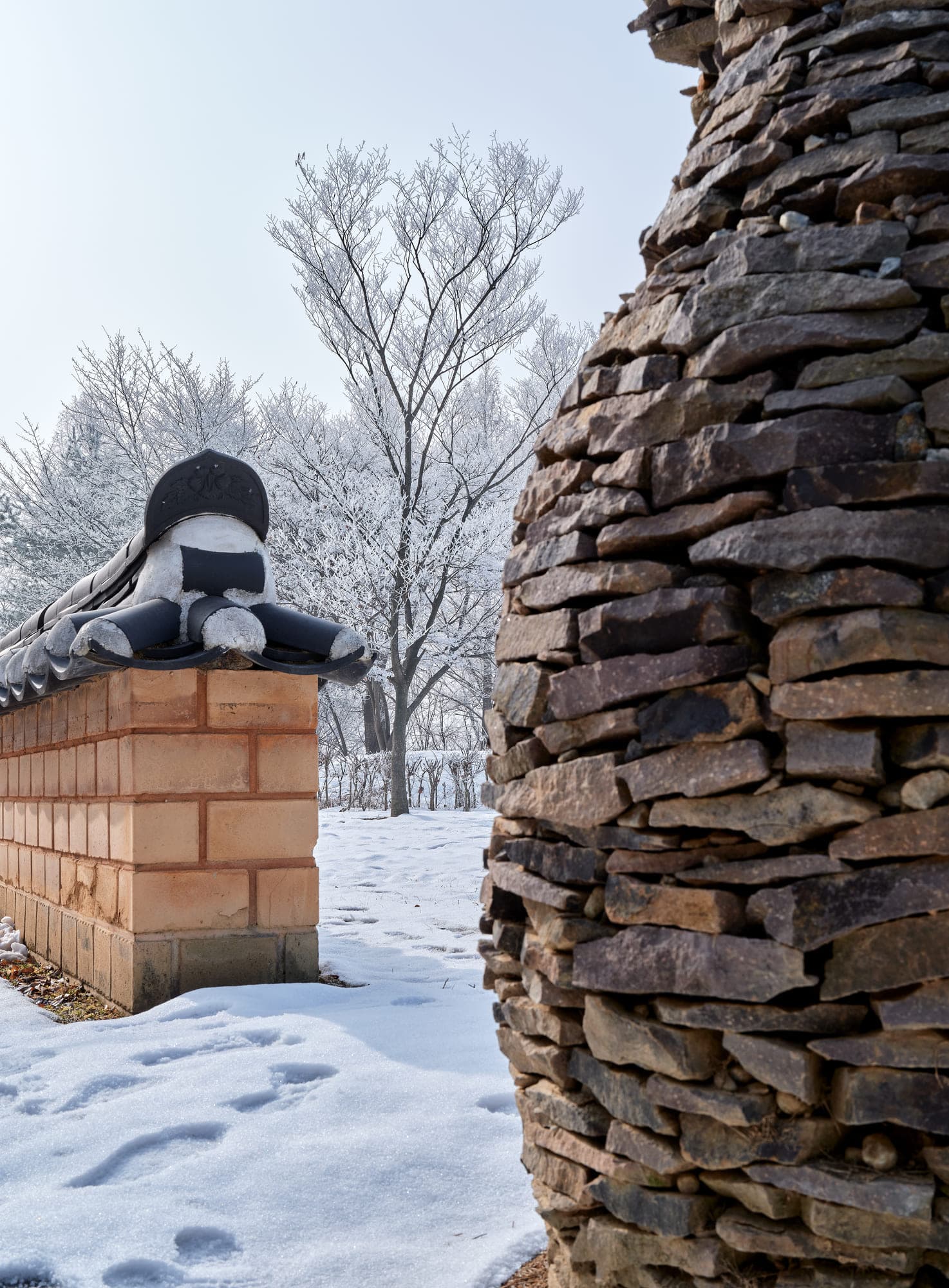
Traditional Korean Wall and Stone Sculpture in Winter

Gyeongancheon Wetland Ecological Park sits on the edge of the city, a short drive from the surrounding residential areas. In winter, snow and hoarfrost strip the landscape back to its structure, and what remains reads as a quiet catalogue of Korean ideas about space, balance, and form.
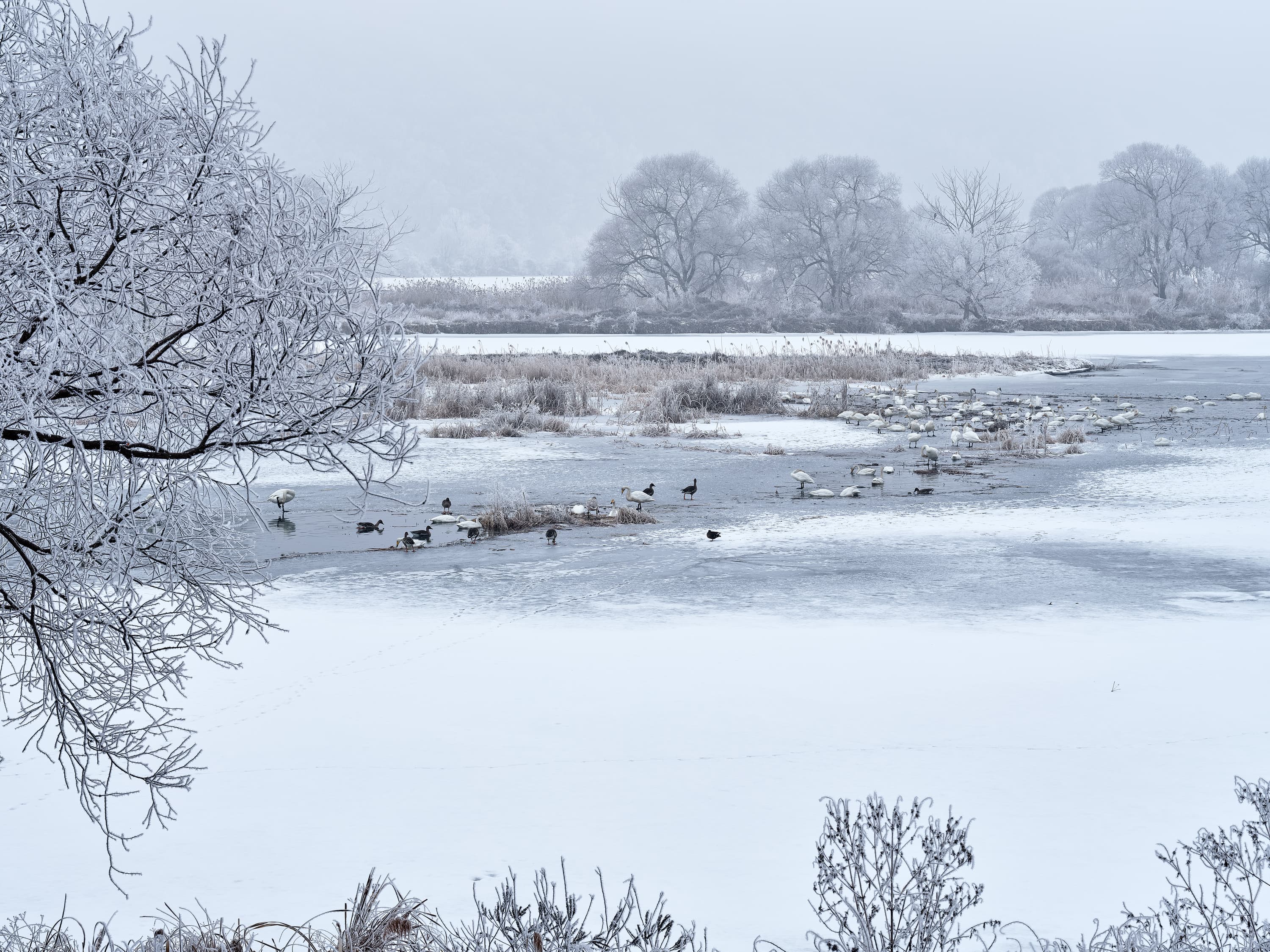
Winter Haven for Birds at Gyeongancheon Park

Emptiness

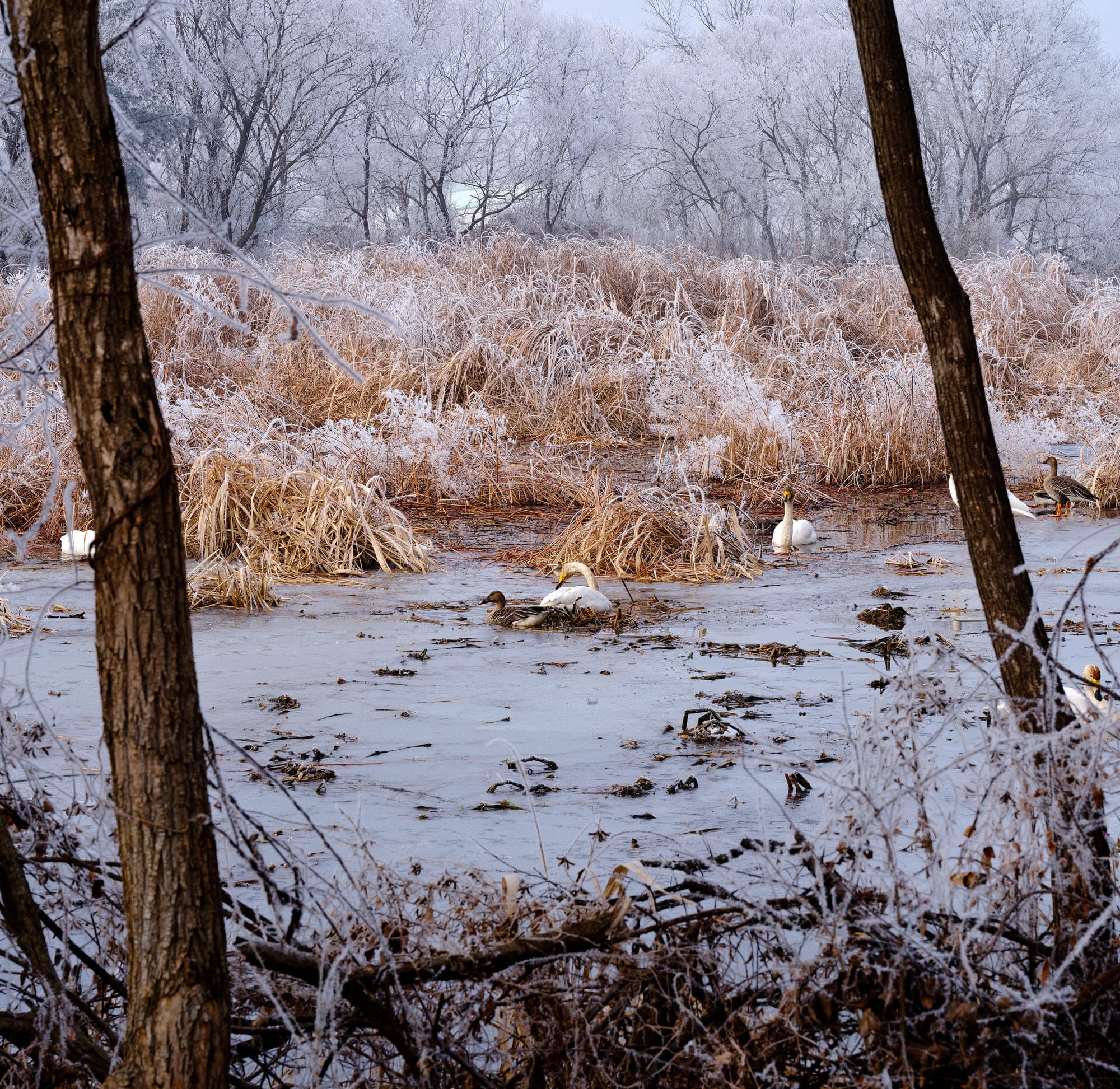
Swans and Ducks in a Winter Wetland

The park sits as a deliberate gap inside the surrounding sprawl. Yeobaek (여백), the principle of intentional empty space in Korean ink painting and design, treats absence as part of the composition: what is left out gives shape to what stays in. The wetland works the same way at urban scale.

Yellow-Throated Bunting Among Frosted Branches

The yellow-throated bunting overwinters here. A bird this small needs a background this empty.

Swan Profile with Frosty Background

Whooper swans return each winter, and have for far longer than the park has had its name. They come back because the place stays.

Frosted Trees in Gyeongancheon

Balance

Stone Sculpture Amidst Frosty Landscape

A pair of stacked-stone sculptures stands at the entrance of the park. Small towers of this kind, doltap (돌탑), are a common sight along Korean trails and ridgelines, where walkers add a stone as they pass. The form has its contemporary echo in artists like Andy Goldsworthy, but the practice here is older and quieter.

Ice-Crystal Bear Sculpture

The doltap tradition has moved through shamanism, Buddhism, and Confucianism, carrying values that survive each transition: patience, attention, an affection for order. The snow forms its own version on whatever surface holds still long enough.

Frosted Reeds by the Riverside

Serenity

A Frosted Branch in Winter

The muted palette of a snowy day calms the senses. This kind of composition appears throughout sumukhwa (수묵화), the Korean ink wash tradition, and in the work of artists such as Hong Sungsook (홍성숙).

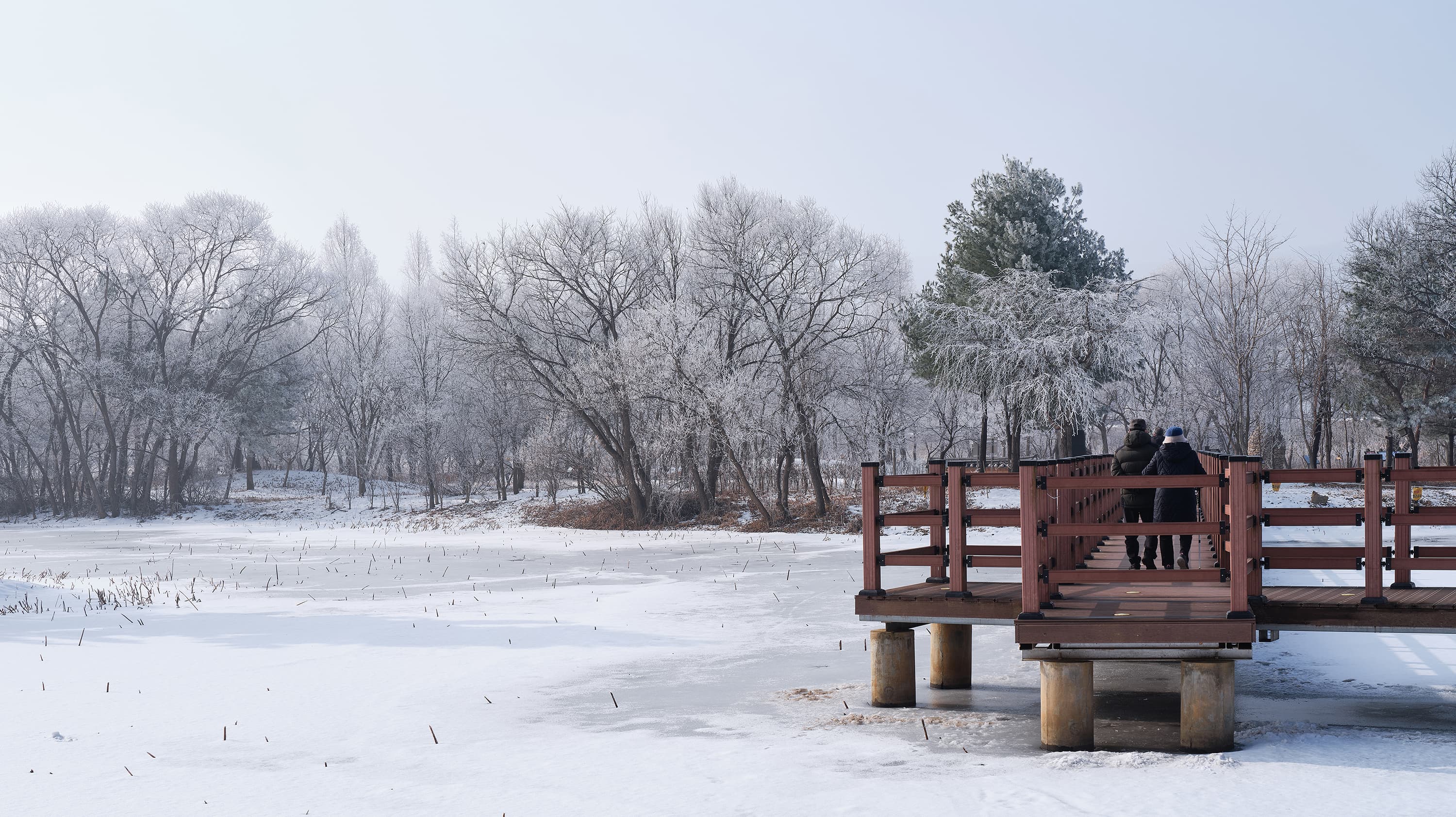
A single figure walks along a snow-covered pathway lined with trees wrapped in delicate frost

The contrast between dark branches and pale ground echoes the brushwork of those paintings. Sumukhwa lets the unpainted ground carry as much of the image as the ink does, and the winter park does the same: every line is held against an absence that gives it weight.

Frost-Covered Landscape in Gyeongancheon Park

Harmony

Golden Reeds Amid Winter's Chill

Harmony is the central image of the Taegeukgi (태극기), the Korean flag, and the park holds it in plain view. Water and land share the frame: each defines the edge of the other.

Red-brown path winding through Gyeongancheon Park in Korea

The trails curve rather than cut. Pungsu-jiri (풍수지리), the Korean reading of land and energy, treats a path as something that should follow the shape of what it crosses. The result is a park that feels arranged with the landscape rather than against it.

Man walking away on a bridge over a frozen lake